
By George Ogunjimi Esq
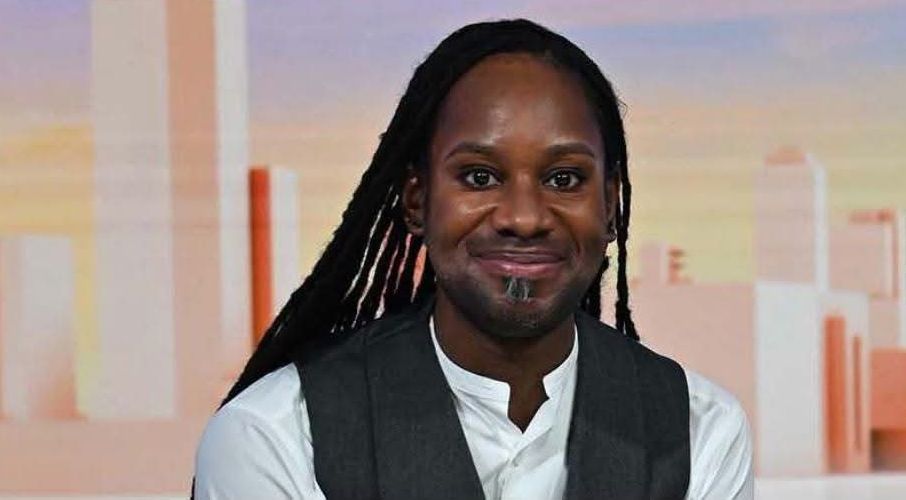
The death of Professor Jason Arday has brought renewed attention to the destructive consequences that can arise when legitimate public scrutiny becomes intertwined with racial hostility, personal humiliation and relentless media pressure. Arday, who became one of Britain’s most prominent Black academics, found himself at the centre of an intense controversy concerning his academic record and allegations of plagiarism. Whatever the legitimate questions surrounding his work, the manner in which the controversy developed raises difficult questions about racism, accountability, the responsibilities of the media and the treatment of Black academics in Britain.
There is an important distinction between criticism and persecution. Universities have a responsibility to investigate allegations concerning academic integrity, and academics in positions of considerable public responsibility must be prepared to have their work scrutinised. Arday himself acknowledged mistakes in his doctoral work and faced serious questions about aspects of his academic record. Such matters should be investigated through transparent and fair institutional processes.
However, legitimate scrutiny does not require the destruction of an individual’s dignity. Once allegations become a sustained public campaign, amplified across newspapers and social media and accompanied by racialised commentary, the consequences can become profoundly different. Arday’s case became more than an academic dispute. It became part of a much wider political and cultural argument about race, diversity and the presence of Black people within Britain’s universities.
For many Black academics and commentators, the treatment of Arday reflected a familiar double standard. Black scholars who achieve prominent positions can find themselves subjected not merely to professional examination but to intense scrutiny of their identity, background and legitimacy. The question therefore arises: would the same controversy have generated the same level of hostility and public fascination had the individual involved not been a Black academic associated with debates about racial equality and diversity?
That question should not be used to dismiss legitimate concerns about academic standards. Rather, it should encourage society to examine whether those standards are applied consistently and whether racial prejudice influences the language, intensity and character of public criticism. Accountability is necessary in academia, but accountability must be fair, evidence-based and proportionate.
The most serious issue surrounding Arday’s death is the question of causation. It would be wrong to state as an established fact that the campaign caused his death. The circumstances of his death remain subject to investigation, and the police have not established that it was caused by harassment or that it was suspicious. At the same time, Arday’s family has said that the campaign of misinformation and harassment placed enormous pressure on him and has asked for the harassment of the family to stop.
That statement should not be ignored. Even if a direct causal connection cannot yet be established, it is reasonable to ask what happens to a human being when professional criticism becomes a relentless public assault. Behind every headline, social-media post and accusation is a person with family, friends and colleagues. Public figures do not cease to be human simply because they become subjects of controversy.
The Arday affair therefore presents Britain with a difficult but necessary conversation. Racism does not always appear as an explicit racial slur. It can also operate through disproportionate suspicion, racialised stereotypes, selective outrage and the assumption that the achievements of a Black person are inherently less credible or deserving of scrutiny. At the same time, confronting racism must not mean abandoning the principles of academic integrity or protecting people from legitimate investigation.
The challenge is to hold both principles together. Academic institutions must investigate misconduct rigorously. Journalists must report allegations responsibly and distinguish evidence from speculation. Commentators must remember the difference between criticism of someone’s work and attacks upon their character. And society must be willing to examine whether racial prejudice influences whose mistakes become national scandals and whose mistakes remain professional matters.
Jason Arday’s death should therefore not become another occasion for competing political camps to score points against one another. It should instead prompt reflection on the human cost of public humiliation and the particular pressures faced by Black academics who occupy highly visible positions. If there were failures in Arday’s academic career, they should be examined honestly. If there was racism or disproportionate harassment in the campaign against him, that too deserves honest examination.
The final lesson should be one of humanity. Accountability and compassion are not opposites. A society can demand high standards while refusing to dehumanise those who fall short. It can investigate allegations without turning an individual into a public spectacle. And it can challenge racism without abandoning the principle that evidence, fairness and due process must apply to everyone.
In the wake of Jason Arday’s death, those principles matter more than ever. Whatever future investigations ultimately establish about the circumstances of his death, the controversy surrounding his final months should force Britain to confront a difficult question: when does legitimate accountability become a campaign of public destruction, and does race influence where that line is drawn?
George Ogunjimi Esq
jurisrepubliclegal@gmail.com