
By Achile Danjuma
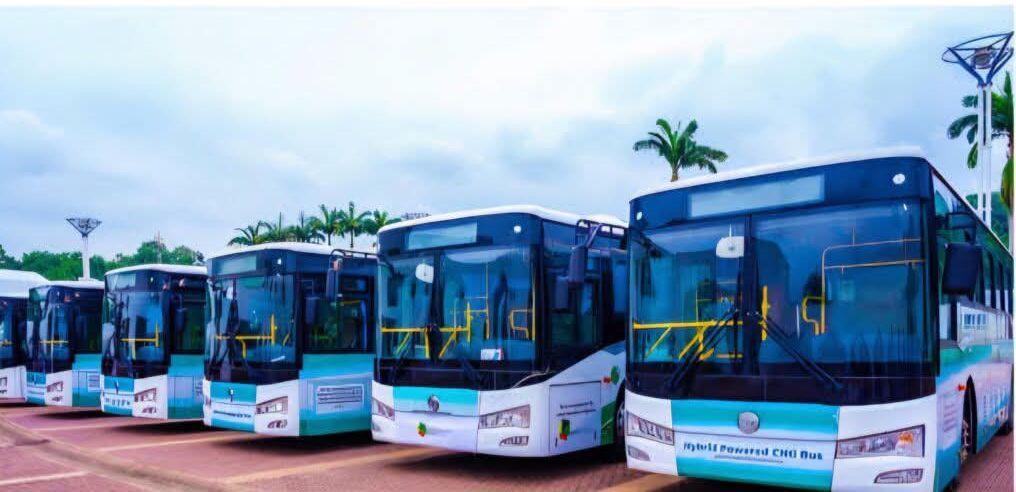
President Bola Ahmed Tinubu announced Saturday that Nigerians are “already experiencing measurable reductions in transportation costs,” citing CNG-powered buses and electric vehicles as evidence of his administration’s success in cushioning the effects of fuel subsidy removal.
The President’s statement, released through his media aide, detailed fare reductions across multiple states — from Borno to Kaduna, Oyo to Enugu — and reaffirmed his commitment to making cheaper transportation a reality for all Nigerians from October 1, 2026.
But within minutes of the announcement, the response from Nigerians online painted a vastly different picture — one of disbelief, anger, and accusations of a government disconnected from the reality on the ground.
According to the statement, Tinubu met with all 36 state governors on August 27 to discuss strategies to crash transportation costs nationwide. Following that meeting, an implementation committee for the National Affordable CNG Transit Programme was established under the Nigeria Governors’ Forum.
The President cited the following examples as proof of progress:
– Borno State: CNG-powered and electric public transport now charges between ₦50 and ₦100 on routes where commercial operators charge ₦300 to ₦600.
– Kaduna State: 100 CNG buses provide free transportation on major routes, carrying 3.2 million passengers and saving commuters over ₦3.5 billion in the first year.
– Oyo State: Lagos–Ibadan fare dropped from ₦8,000 to ₦3,200 on CNG buses.
– Adamawa State: Fares cut by 50% — from ₦8,000 to ₦4,000.
– Enugu State: Enugu–Nsukka fare reduced from ₦2,500 to ₦1,500.
– Plateau State: Government-supported buses carry 13,000 commuters daily at ₦200 versus ₦500 commercially.
– Abuja: Through NURTW partnership, fares on CNG-converted vehicles have dropped — Area 1 to Gwagwalada from ₦1,500 to ₦900; Nyanya from ₦700 to ₦420; Wuse from ₦400 to ₦240.
– Niger State: Suleja–Abuja fare reduced from ₦800 to ₦550.
– Abia State: 40 electric buses deployed with 50% subsidised fares.
“These are not projections. Nigerians are already experiencing these savings,” Tinubu stated.
The President also highlighted his administration’s broader investment in CNG infrastructure, noting that over 120,000 vehicles have been converted, with more than 400 certified conversion centres and over 90 CNG refuelling stations nationwide.
He warned against returning to what he called the “ruinous petrol subsidy regime” and urged Nigerians to embrace cheaper alternatives.
How Nigerians Responded
The reaction was swift and scathing.
Auwal M. Haruna questioned the President’s rhetoric: “Which figure of speech is this?”
Sani Abdullahi Tanko expressed disbelief: “Is it a normal person that’s speaking?”
Steeve Taylor asked simply: “Where in Nigeria?”
Dickson Godson mocked the President’s location: “From someone in France?”
Muhammad Bello Adamu issued a political call to action: “We can fix this at the polling unit in January” — a reference to the 2027 presidential election.
Chima Iro invoked cultural expression of frustration: “Thunder where are you?”
The President’s statement and the public’s reaction reveal a widening gulf between official narratives and the lived experiences of ordinary Nigerians.
While the government points to pilot programmes and state-level interventions, many citizens say these initiatives have not translated into relief in their daily commutes. In most Nigerian cities, transportation costs remain high, and the promised nationwide reduction appears, to many, more aspirational than actual.
Critics argue that citing isolated examples — a few hundred buses in select states — does not constitute a nationwide reduction. With over 200 million Nigerians relying on transportation daily, the scale of the interventions described appears insufficient to justify the President’s sweeping claim.
Furthermore, the timing of the announcement — more than a year before the October 2026 target date — raises questions about whether the government is prematurely celebrating progress that is not yet felt by the majority.
The backlash carries significant political weight.
Tinubu’s administration has faced mounting criticism over its economic policies, particularly the removal of fuel subsidies, which led to sharp increases in transportation and food costs. The President’s claim that relief is already at hand may be viewed by many as tone-deaf — or worse, an attempt to rewrite reality ahead of the 2027 elections.
The comment by Muhammad Bello Adamu — “We can fix this at the polling unit in January” — reflects a growing sentiment that the ballot box, not government press releases, will be the ultimate arbiter of the administration’s performance.
The President has promised that from October 1, 2026, more Nigerians will see measurable reductions in transportation costs. Whether that promise materialises — and whether Nigerians believe it — remains to be seen.
For now, the gap between the government’s optimistic messaging and the public’s lived reality continues to widen, fuelling a credibility crisis that may prove difficult to overcome.