
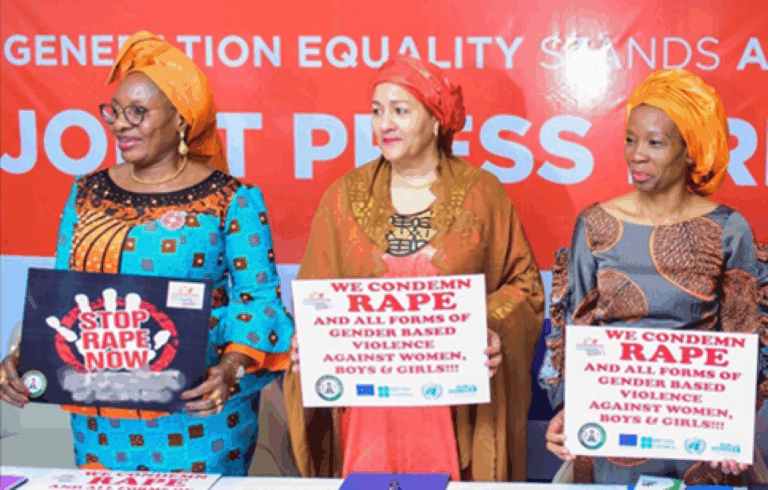
UN deputy secretary-general Amina Mohammed has warned that violence against women and girls continues to be fuelled by war, militarisation and entrenched inequality, urging governments to move beyond condemnation and take decisive action.
Speaking at a high-level meeting marking five years of the UN Group of Friends for the Elimination of Violence against Women and Girls, she said conflicts around the world are exposing women and girls to severe and lasting harm.
The UN deputy chief spoke on the sidelines of the ongoing 70th Session of the Commission on the Status of Women at the UN headquarters in New York on Thursday.
According to the UN, more than 4,500 cases of conflict-related sexual violence were verified in 2024, although the true number is likely far higher due to stigma, fear and collapsed reporting systems.
Ms Mohammed pointed to alarming patterns in several crises. In Sudan, UN experts have reported widespread sexual violence and attacks on women human rights defenders.
In the Democratic Republic of the Congo, a child has been reported raped every half hour, while in Haiti, sexual violence against children surged dramatically in recent years.
Ms Mohammed stressed that women must be central to peace processes and political decision-making, warning that lasting peace cannot be achieved while women and girls remain excluded and unprotected.
In a related development, UN human rights chief Volker Türk said he was appalled by the devastating impact on civilians of increasing drone attacks in Sudan, amid reports that more than 200 civilians have been killed by drones since March 4 alone in the Kordofan region and White Nile state.
In West Kordofan, at least 152 civilians have reportedly been killed by Sudanese army drone strikes, including at least 50 when a market and a hospital were hit.
Attacks on two separate markets in Abu Zabad and Wad Banda on March 7 left at least 40 civilians dead, and a lorry carrying civilians was struck allegedly by a SAF drone on 10 March, reportedly killing at least 50 civilians.
In South Kordofan, at least 39 civilians were reportedly killed, including 14 in the state capital Dilling, in heavy artillery shelling by the Rapid Support Forces and allied SPLM-North between March 4 and 5.
Many homes, schools, markets and health facilities were damaged or destroyed in the attacks, compounding the impacts on civilians and local communities.
(NAN)