
By Abasi Ita
.
The University of Calabar has launched a digital reporting platform known as the “Tokam” App to curb gender based violence and provide survivors with a safe and anonymous avenue to report cases.
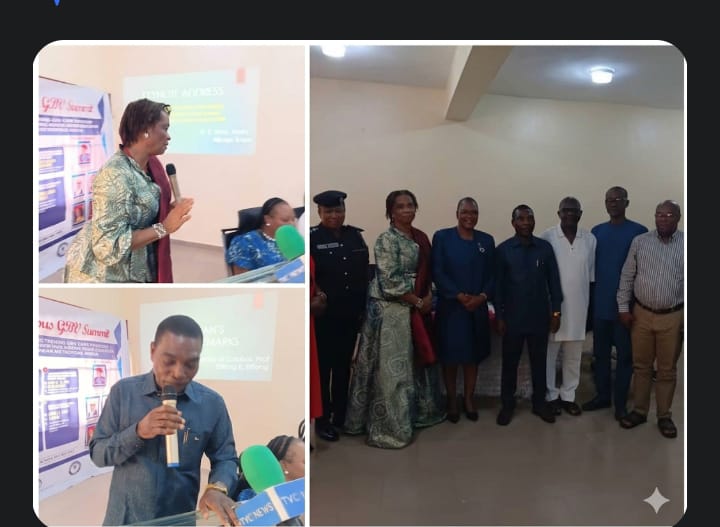
The initiative was led by a Senior Lecturer in the Department of Public Health, Dr. Glory Mbe Egom Nja, and unveiled at the College of Medical Sciences Conference Hall, UNICAL, during the close of a series of interventions aimed at strengthening the capacity of gender based violence care providers and improving reporting systems within Calabar Metropolis.
Speaking at the launch, Dr. Nja explained that the “Tokam” App is a research driven digital platform designed to ensure anonymity, improve access to care, strengthen multi sector responses, and enhance reporting of gender based violence, particularly cases occurring within school environments.
She noted that the platform is not limited to Cross River State but is intended for broader use, positioning UNICAL as a leader in technology driven responses to school related gender based violence.
According to her, the project is backed by evidence based research and collaboration aimed at addressing the persistent underreporting of sexual and gender based violence, which she described as a major public health concern.
Dr. Nja also disclosed that her team implemented a broader intervention tagged the Calabar Inter Campus GBV Summit, which featured a media panel session, a two day training programme for healthcare providers and GBV personnel, an inter campus awareness rally involving five tertiary institutions, a student sensitization workshop, and the official launch of the app.
She expressed appreciation to the Women and Health Together for the Future (WHTF) for funding the initiative, and thanked the UNICAL Vice Chancellor for his support.
The Vice Chancellor, Professor Offiong Efanga Offiong, represented by the Deputy Vice Chancellor for Research, Linkages and Collaborations, Professor Anthony Eneji, commended the initiative, describing it as timely and impactful.
He said the app would strengthen reporting systems, empower survivors, and improve institutional responses to gender based violence, thereby creating safer learning environments.
The Vice Chancellor also described gender based violence as a complex social and health challenge with psychological, clinical, and societal consequences, calling for a multidisciplinary approach involving health professionals, legal experts, civil society organizations, and other stakeholders.
He encouraged both staff and students to embrace the initiative and support its sustainability for the benefit of society, especially the girl child.
The Provost of the College of Medical Sciences, Professor Ngim Ngim, represented by Professor Sunday Bisong, also praised the initiative, noting that continuous sensitization and staff training remain critical in addressing rape, sexual harassment, and other forms of gender based violence on campus.
He added that every staff member has a responsibility to act as an agent of change.
The Executive Director of the Centre for Gender Development, Professor Roseline Duke, urged members of the university community to adopt the app, stressing that institutions of higher learning play a key role in shaping social behaviour and must ensure accountability for offenders.
She emphasized that universities must not only develop policies but also ensure effective implementation through practical tools such as digital reporting systems.
The Director of Health Services, Dr. Kaiser Etta, commended Dr. Nja for creating a platform that empowers survivors to speak out, noting that gender based violence often leaves deep psychological trauma.
The keynote speaker, Ambassador Nkoyo Toyo, called for the mainstreaming of gender considerations in university systems beyond digital tools, describing sexual harassment as a structural problem that requires sustained institutional response.
She highlighted the importance of integrating digital solutions into policy frameworks and ensuring that reporting systems are accessible, effective, and survivor friendly.
In their goodwill messages, the Commissioner for Social Welfare and Community Development, Archbishop Professor Margaret Ene Ita, and the Cross River State Commissioner of Police, CP Rashid B. Afegbua, both commended the initiative.
They described it as a timely intervention that would improve reporting, strengthen accountability, and support victims of gender based violence.
The event also featured technical presentations by medical experts, legal practitioners, sociologists, policymakers, and gender advocates, as well as a stage performance by the UNICAL Chapel of Redemption Theatre highlighting the realities of gender based violence in society.