
By Abasi Ita
A professor of Animal Breeding and Genetics at the University of Calabar, Prof. Affiong Joseph Henry, has called for increased utilization of Nigeria’s indigenous livestock and poultry breeds as a sustainable pathway to improving food security in the country.
Prof. Affiong made the call while delivering the 154th Inaugural Lecture of the University of Calabar at the Godswill Akpabio International Conference Centre. The lecture was titled “Unlocking Potential: The Interplay of Genes, Environment and Phenotype in Animal Breeding and Sustainable Livestock Production.”
She noted that Nigeria is richly endowed with diverse local livestock and poultry breeds that possess unique genetic traits and are well adapted to different agro ecological zones. According to her, these indigenous breeds represent a largely untapped resource capable of boosting animal production and addressing food security challenges at both national and global levels.
The scholar explained that with deliberate breeding and genetic improvement, local livestock can significantly increase productivity and meet the rising demand for animal protein. She stressed the need for concerted efforts to conserve, improve and effectively utilize animal genetic resources, urging government and stakeholders to prioritise the livestock sector.
Prof. Affiong further emphasized that policies aimed at transforming the livestock industry must be inclusive and gender sensitive, spanning all value chains and categories of producers. She called for incentives for custodians of animal genetic resources to encourage conservation and improvement of indigenous species.
She also highlighted the importance of environmental sustainability, noting that the environment plays a critical role in animal production and must be protected from harmful human activities.
The inaugural lecturer advocated the adoption of genome editing technologies in livestock production, while stressing the need for clear regulatory guidelines to ensure safe and precise genetic modification. She also recommended innovative phenotyping approaches such as automated sensor based measurements, image analysis and spectral technologies for effective large scale livestock improvement.
In his remarks, the Vice Chancellor of the University of Calabar, Prof. Offiong Efanga Offiong, commended Prof. Affiong for delivering a comprehensive and insightful lecture, describing it as a significant contribution to animal science and agricultural development.
He said the message on harnessing indigenous livestock breeds for food security was timely and urged agriculturists and livestock experts to collaborate with the university to revive the Unical farm and make it a model for others to emulate.
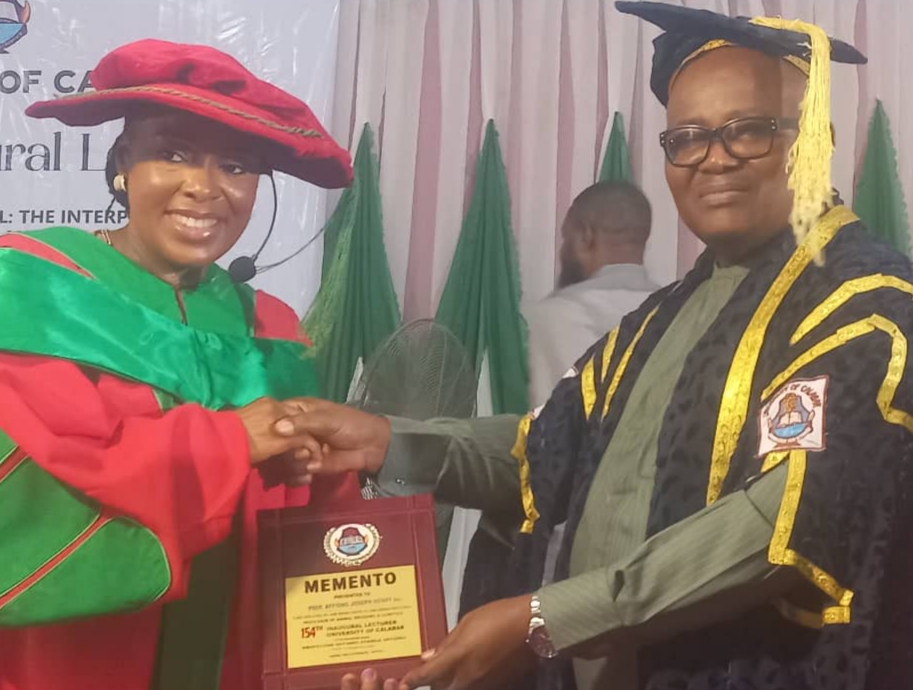
The well attended lecture concluded with the presentation of a memento to the inaugural lecturer.