
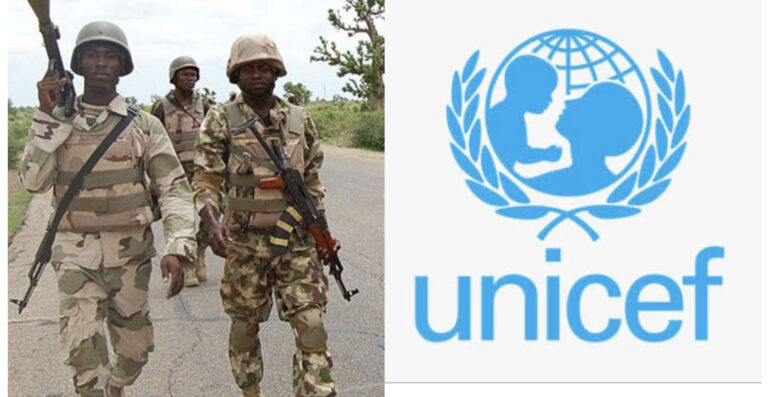
The Nigerian Armed Forces and the United Nations Children’s Fund (UNICEF) have stepped up collaboration to improve the protection of children encountered during military operations through the validation of new operational guidelines and procedures.
The effort was the focus of a three-day Validation and Institutionalisation Workshop on Operational and Institutional Tools Supporting the Implementation of the Handover Protocol on Children Encountered During Military Operations, which began on Wednesday in Abuja.
Speaking at the opening session, UNICEF Nigeria’s Chief of Child Protection, Natalie McCauley, said the workshop was designed to reinforce the implementation of the Handover Protocol signed by Nigeria in 2022.
She explained that the protocol provides a clear framework for the protection, temporary care and prompt transfer of children encountered during military operations from military custody to civilian child protection agencies.
According to her, the agreement reflects Nigeria’s commitment to ensuring that every child affected by military operations is treated with dignity and recognised primarily as a child in need of protection.
McCauley added that UNICEF and the federal government had also developed a 2024–2027 implementation plan to fully integrate the protocol into military training, doctrine and operational procedures.
She noted that the workshop would review and validate three major operational tools—the Early Warning System, Standard Operating Procedures and the Reporting and Monitoring Toolkit—to strengthen implementation across the Armed Forces.
She encouraged participants to make practical contributions that would improve the effectiveness of the protocol.
Representing the Ministry of Defence, Assistant Director Maxwell Hedima said the workshop aimed to validate operational documents that would enhance child protection during military operations while ensuring compliance with international standards.
Hedima stressed that children remain the most vulnerable victims of armed conflict and humanitarian emergencies, adding that the federal government remains committed to developing globally accepted child protection frameworks while promoting professionalism within the Armed Forces.
UNICEF Child Protection Specialist Shah Muhammad Khan said the protocol recognises children associated with armed groups primarily as victims rather than offenders.
He explained that the military is required to transfer such children to civilian authorities, particularly the Ministry of Women Affairs, within seven days of encountering them during operations.
According to Khan, the ministry then provides temporary care, family reunification services, psychosocial support, education and vocational training to aid their successful reintegration into society.
He noted that UNICEF provides technical assistance, while responsibility for implementation rests with the Nigerian government and the Armed Forces.
Khan also said the workshop was reviewing an Early Warning System intended to improve coordination and ensure that children encountered during military operations are quickly identified and referred to the appropriate authorities.
He added that the initiative would strengthen the military’s compliance with international humanitarian standards while supporting the long-term reintegration of affected children, emphasising that acceptance by local communities is essential for sustainable peacebuilding.
A participant from the Department of Defence Civil-Military Relations, Victory Gbaraba, described the workshop as both timely and important.
She said the training equips military personnel with the knowledge needed to respond appropriately whenever children are encountered during operations, including the correct reporting procedures and handover process to civilian authorities.
According to her, members of the Armed Forces are often the first responders in conflict situations involving children, making it essential for personnel at every level to understand the legal and operational guidelines for child protection.
Gbaraba added that participants were developing training guidelines that would enable the knowledge acquired during the workshop to be passed on across the Armed Forces.
The workshop was attended by representatives of the Ministry of Defence, Defence Headquarters, Service Headquarters and military training institutions.
(NAN)