
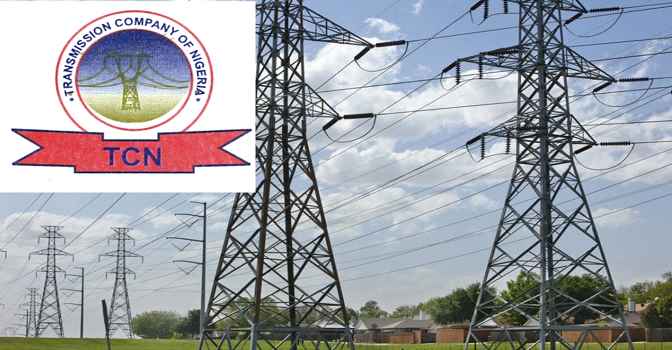
The Transmission Company of Nigeria has raised concerns over increasing attacks on electricity infrastructure in Niger State, revealing that vandals have destroyed 14 spans of its 132-kilovolt high-voltage transmission line in the Lambata axis of Gurara Local Government Area.
The company described the development as economic sabotage capable of undermining electricity supply, threatening lives and frustrating efforts to improve power distribution and industrial growth in the state.
Speaking during a security and community engagement meeting held in Lambata on Monday, the General Manager, Transmission, Abuja Region of TCN, Musa Shuaibu, said the company had been forced to seek the support of traditional rulers, vigilante groups and security agencies following repeated incidents of vandalism in the area.
Officials of the local vigilante group, the Nigeria Security and Civil Defence Corps, the Federal Road Safety Corps and the Niger State Road Traffic Management Agency were also present at the meeting, where they deliberated on the rising incidents of transmission infrastructure vandalism and explored practical measures to address the challenge.
Shuaibu explained that the affected 132kV transmission line, constructed during the administration of former President Shehu Shagari more than four decades ago, was originally designed to wheel electricity from the Shiroro axis through Minna, Bida and Suleja to the Federal Capital Territory, serving as one of the earliest high-voltage infrastructures supporting power supply to the nation’s capital and surrounding communities.
According to him, the line had operated for decades without major interference until recently when criminals began targeting its conductors.
“What we intend to do is to hold a meeting with our fathers here. Likewise, the security personnel here. We have been having issues with our transmission lines. Transmission lines have been vandalised repeatedly. It has never happened before in Niger State. We used to hear it. It does happen in Niger State but not in this area. Not in this particular area. And it has become worrisome to all of us.
“These lines have been in existence for close to 40 years. When they were constructed, nobody ever imagined that people would wake up one day and decide to vandalise them. But suddenly, some individuals have taken it upon themselves to cut these conductors and sell them for little amounts of money,” he said.
Shuaibu lamented that the destruction of transmission facilities was depriving TCN of resources that could have been invested in improving electricity infrastructure and supporting host communities.
“We have about 14 spans of this conductor vandalised. If we are to restore them directly within the region, from our calculations, it will cost us about N32m. If the work is eventually awarded as a contract, the cost may become much higher.
“This is money that should have been used to improve facilities and strengthen the power supply. Instead, we are diverting scarce resources to repair damage caused by some individuals out of sheer wickedness,” he stated.
The TCN official stressed that the consequences of vandalism extended beyond financial losses, warning that a disrupted electricity supply could affect hospitals, businesses and households.
“By the time these lines are cut and supply goes off, your wife, your brother, your sister or even someone in the hospital who needs electricity for medical procedures may be affected.
“These people are not spirits. They are human beings like you and me. They live within our communities. That is why we are appealing to our traditional rulers, community leaders and parents to speak to their people and discourage them from engaging in these criminal acts,” he added.
Shuaibu further warned of the safety implications of damaged high-voltage lines, explaining that residual voltage from fallen conductors could lead to fatalities.
“When these lines are vandalised, there can still be residual voltage on the conductors. Farmers working around the area may unknowingly come into contact with them.
“We have seen situations where animals die after coming close to such installations. We do not pray for human casualties. That is why everyone must take this issue seriously,” he said.
He noted that the vandalised infrastructure directly supplies power to distribution companies.