
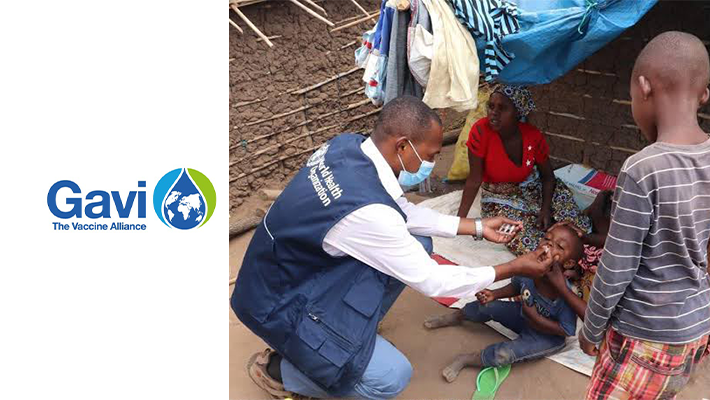
The Vaccine Network for Disease Control (VNDC) has praised the Vaccine Alliance, Gavi, for approving close to 500 million dollars to strengthen Nigeria’s immunisation programme and primary healthcare system over the next five years.
VNDC Chief Executive Officer, Chika Offor, gave the commendation in a statement issued in Abuja after accompanying Gavi Chief Executive Officer, Dr Sania Nishtar, on a visit to the Gavi-supported Apo Primary Health Care Centre in the Abuja Municipal Area Council (AMAC).
According to Ms Offor, the funding, provided under Gavi’s 2026–2030 (Gavi 6.0) programme, will accelerate efforts to reduce the number of zero-dose children while improving equitable access to life-saving vaccines across the country.
She explained that the support would strengthen routine immunisation, expand the Human Papillomavirus (HPV) vaccination programme, sustain polio eradication initiatives and improve vaccine financing.
Ms Offor described the five-year funding commitment as a major milestone that would enhance long-term planning, vaccine procurement, cold-chain infrastructure and healthcare service delivery nationwide.
She said the approval reflected Gavi’s confidence in Nigeria’s health system and would help extend vaccination services to underserved communities.
The VNDC boss stressed that reducing the number of zero-dose children requires more than vaccine supplies and healthcare facilities, noting that strong community engagement remains essential for identifying, referring, tracking and ensuring eligible children complete their immunisation schedules.
She added that Gavi’s visit to the Apo health facility highlighted the critical role of communities in improving vaccination coverage and strengthening primary healthcare.
According to her, traditional and religious leaders, ward development committee members, women’s groups and frontline health workers acknowledged Gavi’s support in providing solar power for the facility, which has improved vaccine storage, maintained the cold chain and enhanced healthcare services for mothers and children.
Ms Offor also described civil society organisations as indispensable partners in immunisation efforts, saying they help mobilise communities, build public trust, combat misinformation and support the identification and vaccination of zero-dose children.
Also speaking, the Executive Director and Chief Executive Officer of the National Primary Health Care Development Agency (NPHCDA), Dr Muyi Aina, commended Gavi and other development partners for their continued support in improving access to quality primary healthcare.
He described the Apo Primary Health Care Centre as a successful example of collaboration between the Federal Government, the local government and development partners.
Mr Aina explained that while the local government built and manages the facility, the Federal Government supports it through the Basic Healthcare Provision Fund, and Gavi supplies vaccines and financed the solarisation of the centre.
He said the partnership has strengthened health infrastructure, improved vaccine storage and delivery, and created a sustainable model that should be replicated nationwide.
The NPHCDA boss urged state and local governments to invest more in primary healthcare and embrace similar partnership models to expand access to quality health services.
He added that sustained collaboration among governments, development partners, civil society organisations, traditional institutions, ward development committees and frontline health workers would be vital to ensuring every eligible child receives life-saving vaccines.
Nigeria is estimated to have about 2.2 million zero-dose children, making it one of the countries with the highest burden globally. Many of these children live in underserved, conflict-affected and hard-to-reach communities where insecurity, poor health infrastructure, poverty and misinformation continue to hinder immunisation efforts.
To address these challenges, the NPHCDA has strengthened partnerships with Gavi, the World Health Organisation (WHO), UNICEF and other stakeholders to expand routine immunisation, improve vaccine cold-chain systems, upgrade primary healthcare facilities, strengthen disease surveillance and build the capacity of frontline health workers.
The initiative aligns with the Federal Government’s Nigeria Health Sector Renewal Investment Initiative and Sector-Wide Approach (SWAp), which aim to revitalise primary healthcare, increase immunisation coverage and ensure every eligible child has access to life-saving vaccines.
Under the Gavi 6.0 programme, the funding will support routine immunisation, primary healthcare strengthening, vaccine financing, polio eradication activities and the expansion of HPV vaccination in Nigeria between 2026 and 2030.