
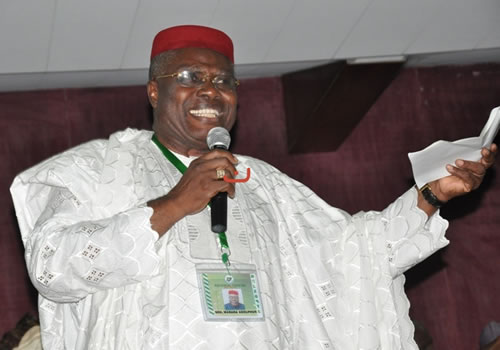
Former Senate President, Senator Adolphus Wabara, has urged political leaders across the country to put aside partisan, ethnic, and religious differences and come together in the interest of national progress.
Wabara made the appeal in a goodwill message to mark his 78th birthday on Monday, stressing that Nigeria’s future largely depends on the decisions citizens and leaders take ahead of the 2027 general elections.
According to him, Nigeria’s biggest challenge remains poor leadership, which he said has consistently undermined the country’s vast human and natural resources over the years.
The former Senate President and current Chairman of the Board of Trustees of the Peoples Democratic Party (PDP) called on opposition parties to close ranks and form a united front aimed at addressing what he described as “economic mismanagement, democratic decline, and worsening insecurity.”
He argued that since 2015, when the All Progressives Congress (APC) came into power, the country has experienced a steady deterioration in key sectors, including the economy and security architecture.
Wabara maintained that Nigeria is not suffering from a lack of capable citizens or resources, but from leadership failure, which he said has deepened poverty, hunger, unemployment, and insecurity across the country.
He also expressed concern over the rising cost of living, weakening purchasing power, job losses, and the growing despair among citizens.
The Abia State elder statesman further noted that many Nigerians can no longer afford basic needs, while businesses continue to shut down and investor confidence declines amid rising insecurity.
He warned that the current trajectory, if not reversed, could further worsen the nation’s condition.
Wabara accused the ruling APC of failing to deliver on its promises, saying the reality on ground reflects deepening hardship, increased debt burden, and widening national divisions.
He cautioned Nigerians to critically evaluate the performance of the current administration as they prepare for the next general elections, insisting that continuity without reflection could endanger the country’s future.
The former Senate President also emphasized the importance of a strong and vibrant opposition in any democratic system, warning against attempts to weaken or silence dissenting voices.
He insisted that democracy thrives on competition of ideas, accountability, and respect for opposing views.
Wabara concluded by calling for unity among opposition politicians, saying personal ambitions and rivalries must be set aside in favour of building a broad coalition committed to what he described as “rescuing Nigeria from leadership failure.”